SIL8123 - Artificial Intelligence for Cyber Security
Sem-I-2026-2027 and Sem-I-2025-2026.

Assistant Professor Department of Computer Science and Engineering, IIT Delhi
Coordinator Center of Excellence in Cyber Systems and Information Assurance, IIT Delhi
Associated Faculty Khosla School of Information Technology, IIT Delhi
Associated Faculty Bharti School of Telecommunication Technology and Management, IIT Delhi
Chair Professor Amit and Deepali Sinha Chair in Cyber Security, IIT Delhi
I am an Assistant Professor in the Department of Computer Science and Engineering at Indian Institute of Technology (IIT) Delhi. I am currently serving as the Coordinator of the Center of Excellence in Cyber Systems and Information Assurance, and holding the Amit and Deepali Sinha Chair in Cyber Security at IIT Delhi. I also work closely with Khosla School of Information Technology and Bharti School of Telecommunication, and lead the Security and Privacy Research Innovation Group (SPRING) hosted in Kripalani Lab at IIT Delhi.
In the past, I received my B.Tech. in Electrical Engineering at IIT Delhi. I obtained my Ph.D. degree in Computer Engineering under the guidance of Prof. Jerry Park at Virginia Tech. Before returning back to IIT Delhi, I also worked as a Postdoctoral Research Associate in the Department of Computer Science at Purdue University under the supervision of Prof. Dongyan Xu.
My research interests include discovering and mitigating the security and privacy threats in the network protocols utilized in cyber-physical systems. I focus on developing novel mechanisms for lightweight integrity protection, robust intrusion detection and resilient privacy preservation using the tools of applied cryptography and artificial intelligence.
Ph.D., Computer Engineering
Virginia Tech, 2016
B.Tech., Electrical Engineering
IIT Delhi, 2009
Sem-I-2026-2027 and Sem-I-2025-2026.
Sem-I-2026-2027 and Sem-I-2025-2026.
Sem-II-2025-2026.
Sem-II-2022-2023, Sem-II-2021-2022 and Sem-II-2020-2021.
Sem-II-2024-2025, Sem-I-2024-2025[Abu Dhabi Campus] and Sem-I-2023-2024.
Sem-I-2022-2023
The applications of cyber-physical systems (CPSs), such as smart homes, intelligent transportation, and smart cities, are proliferating and transforming our everyday lives. However, unlike traditional enterprise computing environments, these systems operate under stringent computational, communication, memory, timing, and energy constraints, which makes the direct adoption of advanced security and privacy mechanisms impractical.
As a result, CPSs rely on two complementary lines of defense: tailored cryptographic techniques to prevent attacks while fitting the fundamental system constraints, and artificial intelligence (AI)-based security systems to detect the attacks that cannot be prevented by cryptographic mechanisms alone.
For such systems, I investigate a fundamental scientific challenge: how can strong security and privacy guarantees be provided for highly resource-constrained, safety-critical, and intelligent CPSs without sacrificing performance, latency, scalability, or usability? Resolving this challenge is critical for these systems to grow sustainably and reach their full potential.
I address the aforementioned challenge through a systematic three-pronged approach: first, emulating these systems for attack and defense experiments; second, analyzing them for security and privacy vulnerabilities; and third, mitigating the discovered vulnerabilities with innovative defense mechanisms.
Concretely, to conduct attack and defense experiments, I develop the software and hardware mechanisms needed to implement core system components in testbeds, and instrument them with domain-specific security, privacy, and performance analysis tools. To discover vulnerabilities, I analyze the limitations of the cryptographic protocols these systems employ using protocol verification tools, and I explore the weaknesses of their AI components against adversarial threats.
To secure these systems, my work moves beyond incremental defenses: it identifies fundamental limitations in existing approaches, develops new abstractions that reformulate the security-performance trade-off, and validates them through rigorous theoretical and experimental analysis. Together, these contributions aim to advance both the scientific foundations and the engineering practice of modern cybersecurity.
I pursue this research with my talented team in the Security and Privacy Research Innovation Group (SPRING). Building on the approach above, the group’s activities are organized along three complementary research verticals, described below.
We develop intrusion detection systems that safeguard diverse environments, including smart home networks, automotive systems, drone communications, speech recognition systems, and edge computing. By analyzing network traffic, device behavior, and user interactions to detect signs of malicious activity, we aim for resilient detectors that produce few false positives, add minimal performance overhead, and withstand adversarial evasion.
Smart Home Intrusion Detection In-Vehicle Network Intrusion Detection 5G Cellular Network Security UAV Security and Regulation Bluetooth Network Security
We develop efficient and secure authentication mechanisms for resource-constrained environments. Drawing on data from 5G networks, in-vehicle and inter-vehicle communication, UAV navigation signals, and IoT devices, we design lightweight cryptographic methods that protect the integrity and authenticity of data and of the devices that produce it, without degrading performance, so that secure communication remains possible even where computation, energy, and bandwidth are scarce.
5G Cellular Network Security UAV Security and Regulation IoT Device Attestation In-Vehicle Network Authentication Inter-Vehicular Network Authentication
We study robust privacy-preserving techniques for sensitive data, such as the storage and authentication of biometric data, while preserving its integrity and availability. We also explore privacy-enhancing technologies for mobile user data, aiming for systems that withstand sophisticated privacy attacks.
Biometric Data Privacy Smartphone User Data Privacy Inter-Vehicular Network Authentication
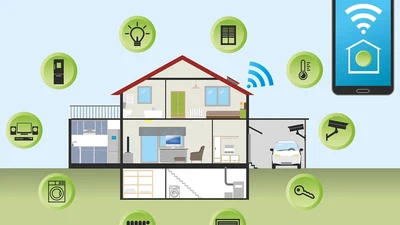
We design intrusion detection systems for smart home networks that detect spoofing and other attacks on IoT devices and remain robust against adversaries who craft inputs to evade …
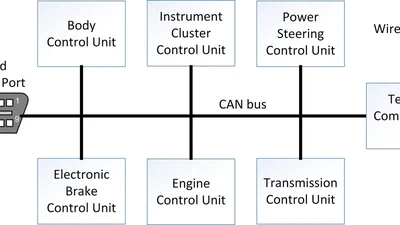
We develop intrusion detection and defense mechanisms for the in-vehicle network that remain robust against adaptive adversaries, and study how well such detectors can be evaluated …
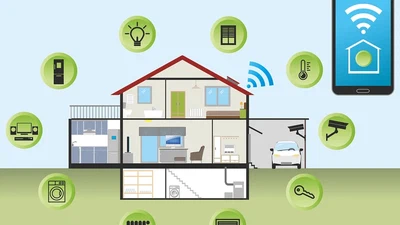
We systematically analyze 5G cellular networks, discover new exploitable attack surfaces, and develop defense mechanisms for mitigating them.
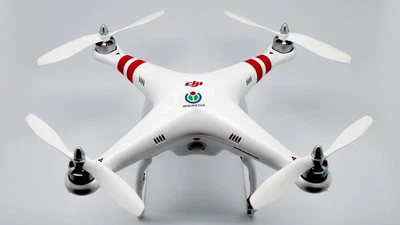
We investigate the attacks targeting the control systems of drones, including the authentication of satellite navigation signals to defend against location spoofing, and bring …
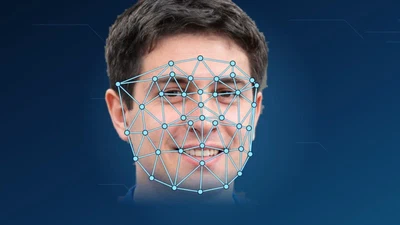
We design template protection and privacy-preserving authentication schemes for biometric data, including non-invertible, cancelable and fuzzy-vault based techniques for signature, …
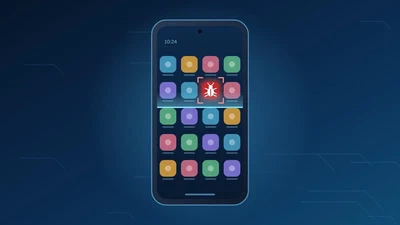
We develop defenses that protect users' personal data on smartphones, including malware detection that stays robust against adversaries who craft apps to evade the detector.
My lab, SPRING, has openings for motivated candidates at several levels: MS (Research) and PhD students, postdoctoral researchers, and project staff (research associates and project assistants) on sponsored research projects. B.Tech. and M.Tech. students looking for a project are also welcome.
If you are interested, please send me an email with a brief description of your background and research interests, how they align with mine, and your CV.
Room 214, Khosla School of Information Technology
Indian Institute of Technology Delhi
Hauz Khas, New Delhi 110016, India
Email: (please enable JavaScript to view)
Phone: (please enable JavaScript to view)